
PG&E’s New Base Charge Explained: Why Solar Owners Are Furious (and What You Can Do About It)
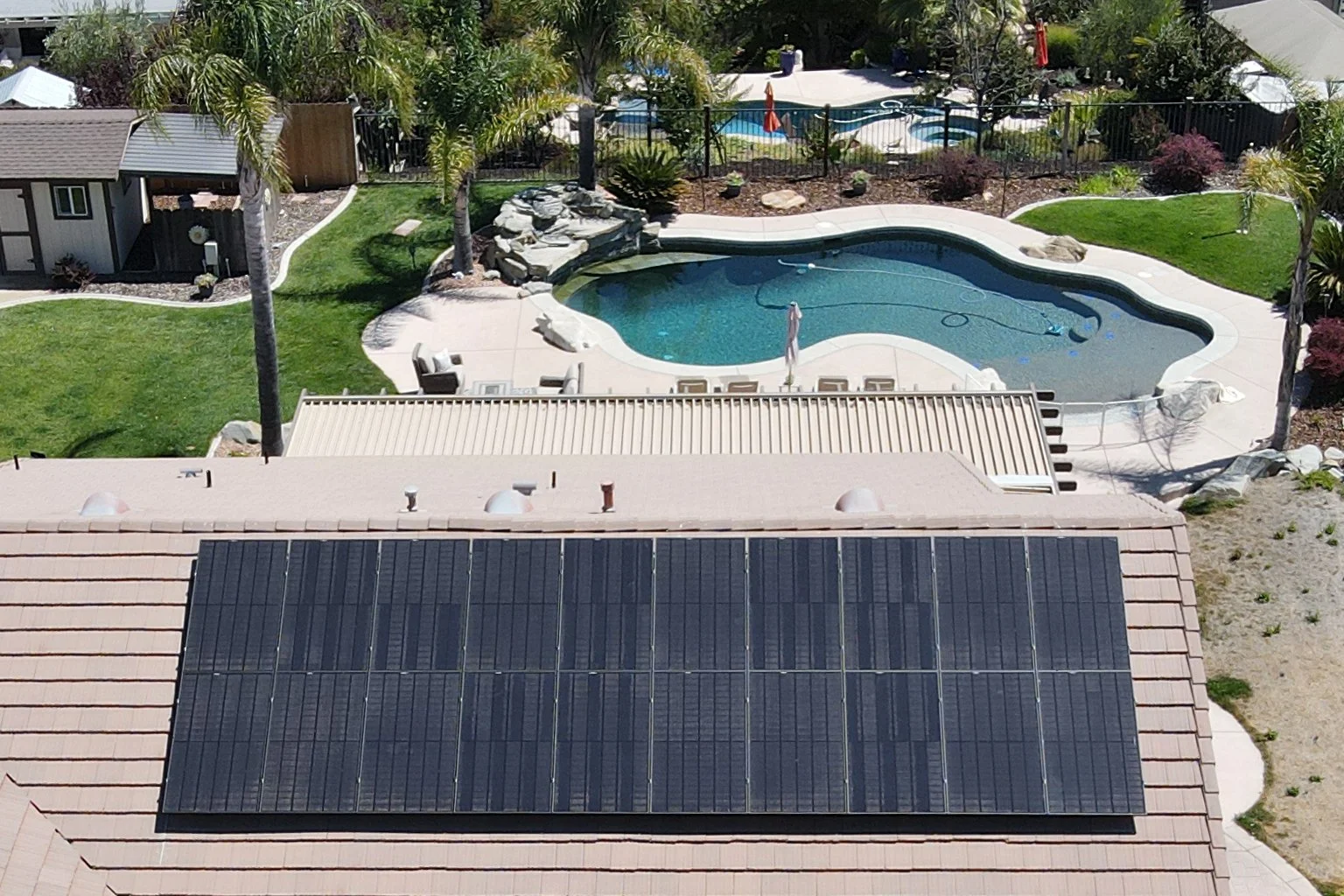
Rooftop solar array on a California home with a backyard pool, illustrating how high-energy-usage households are affected by PG&E’s new Base Charge.
Updated for 2026
PG&E is rolling out a new “Base Charge,” and homeowners across California are having a very reasonable first reaction:
Is PG&E just creating a new fee they can raise forever?
Short answer: it sure looks like it.
The Base Charge is a fixed monthly electricity fee approved by the California Public Utilities Commission that applies to all PG&E customers, including solar households. It currently lands at roughly $24 per month, and you pay it no matter what.
You can’t offset it with solar generation.
You can’t reduce it with energy efficiency.
Batteries don’t help.
Shade studies don’t help.
Nothing helps.
It’s the part of your PG&E bill that belongs to PG&E for eternity.
And that’s exactly why solar owners are blowing up Reddit right now.
👉 Why Your PG&E Bill Isn’t $0 After Going Solar (And Why That’s Normal)
Why This New Charge Has People Talking
PG&E’s new Base Charge is a fixed monthly fee that every customer pays, whether they have solar or not. What’s throwing people off is that it operates outside the rest of the bill.
Most of your electricity costs are tied to usage. Use less, pay less. Generate your own power, pay even less.
The Base Charge doesn’t care.
For solar households, this feels backwards. Solar is designed to reduce grid usage. This fee sits completely outside that system.
The real issue isn’t that solar customers are being “punished.” It’s that PG&E now has a permanent line item they control, regardless of how efficient or independent you become. That’s why people are paying attention.
What the Base Charge Actually Changes
Here’s the truth without the PR gloss:
Solar exports can’t touch the Base Charge.
Your bill will always start at roughly $24 per month before anything else happens.
It reduces the advantage low-usage and solar households previously had.
If you don’t rely heavily on the grid, this fee lands harder.
It creates a structural incentive for PG&E to raise fixed fees over time.
Per-kWh charges trigger public backlash. Fixed charges slide through rate cases much more easily.
Solar still delivers savings. Just not total insulation from PG&E anymore.
Panels still wipe out most grid usage. Batteries still protect you during outages. The Base Charge simply adds friction you can’t eliminate.
👉 The Hidden Solar Savings Most California Homeowners Don’t Expect
Does This Hurt Solar Savings?
A little, yes — but mostly on paper.
The Base Charge exists whether you have solar or not. PG&E will bill you for it either way. Solar still eliminates the largest portion of most electric bills: usage charges.
For households paying $200–$400 per month, the economics still strongly favor solar. This charge doesn’t kill the math. It just limits how much of PG&E’s bill you can erase.
You still save.
You still gain outage protection.
You still regain control over future rate hikes.
PG&E just carved out one small piece they always get to keep.
Does Solar Eliminate the PG&E Base Charge?
No.
The Base Charge applies regardless of solar production, energy efficiency upgrades, or battery storage. It is fixed and unavoidable as long as you remain a PG&E customer.
So… Is This the Beginning of PG&E Charging Solar Customers More Every Year?
Yes.
This charge establishes the mechanism.
Previously, most of your bill was tied to usage, which solar could dramatically reduce. Now PG&E has a permanent foothold that solar can’t eliminate, and nothing prevents fixed charges from creeping upward over time.
That’s not paranoia.
It’s math plus history.
What Homeowners Can Actually Do About It
You can’t fight a fixed charge with solar alone.
But you can reduce how often PG&E gets to bill you beyond it.
For most homeowners, the goal isn’t to escape the grid entirely. It’s to minimize how much of their energy costs PG&E controls.
This is where grid-optional and off-grid system designs come in.
Option 1: Grid-Optional Systems
These systems keep your grid connection but dramatically reduce reliance on it.
With properly sized solar and battery storage, many homes can operate for long stretches without drawing from PG&E at all. You still pay the Base Charge, but your exposure to rate hikes becomes minimal.
This approach works well for:
Homeowners who want outage resilience
People exhausted by unpredictable PG&E bills
Anyone who wants control without fully disconnecting
Rural or semi-rural properties with unstable power
Option 2: True Off-Grid Systems
Fully off-grid homes are designed to operate without utility power entirely. That typically requires:
Solar sized for annual energy needs
Large battery capacity for nights and cloudy stretches
Accurate load calculations to avoid constant limitations
A backup generator for winter storms and extended outages
Adequate space and sun exposure
Not every home can do this, but demand is growing for a reason. Many homeowners want out of PG&E’s rate rollercoaster altogether.
Final Word
Solar still makes sense in California. The economics, outage protection, and long-term stability are still there
But PG&E’s new Base Charge changes the rules. Solar customers are right to be frustrated. This fee is the utility’s foothold — the part of your bill they can increase no matter how efficient or independent you become.
Grid-optional and off-grid designs don’t just save money. They restore leverage.
👉 Talk through whether a grid-optional or off-grid systems makes sense for your home
References
PG&E Base Services Charge overview: https://www.pge.com/en/account/billing-and-assistance/base-services-charge.html
Utility Dive coverage on fixed-charge policy: https://www.utilitydive.com/news/california-fixed-charge-utilities-approved/711599/
California CPUC decision (AB 205 implementation): https://docs.cpuc.ca.gov/PublishedDocs/Published/G000/M521/K913/521913019.PDF
SDG&E billing explanation (fixed charge structure reference): https://www.sdge.com/electric-billing
Reddit discussion that inspired this post: https://www.reddit.com/r/solar/comments/1pi9mun/does_the_new_pge_base_service_charge_screw_over/