
Solar Without Roof Holes: What’s Real, What’s Not, and What We Actually Recommend in California
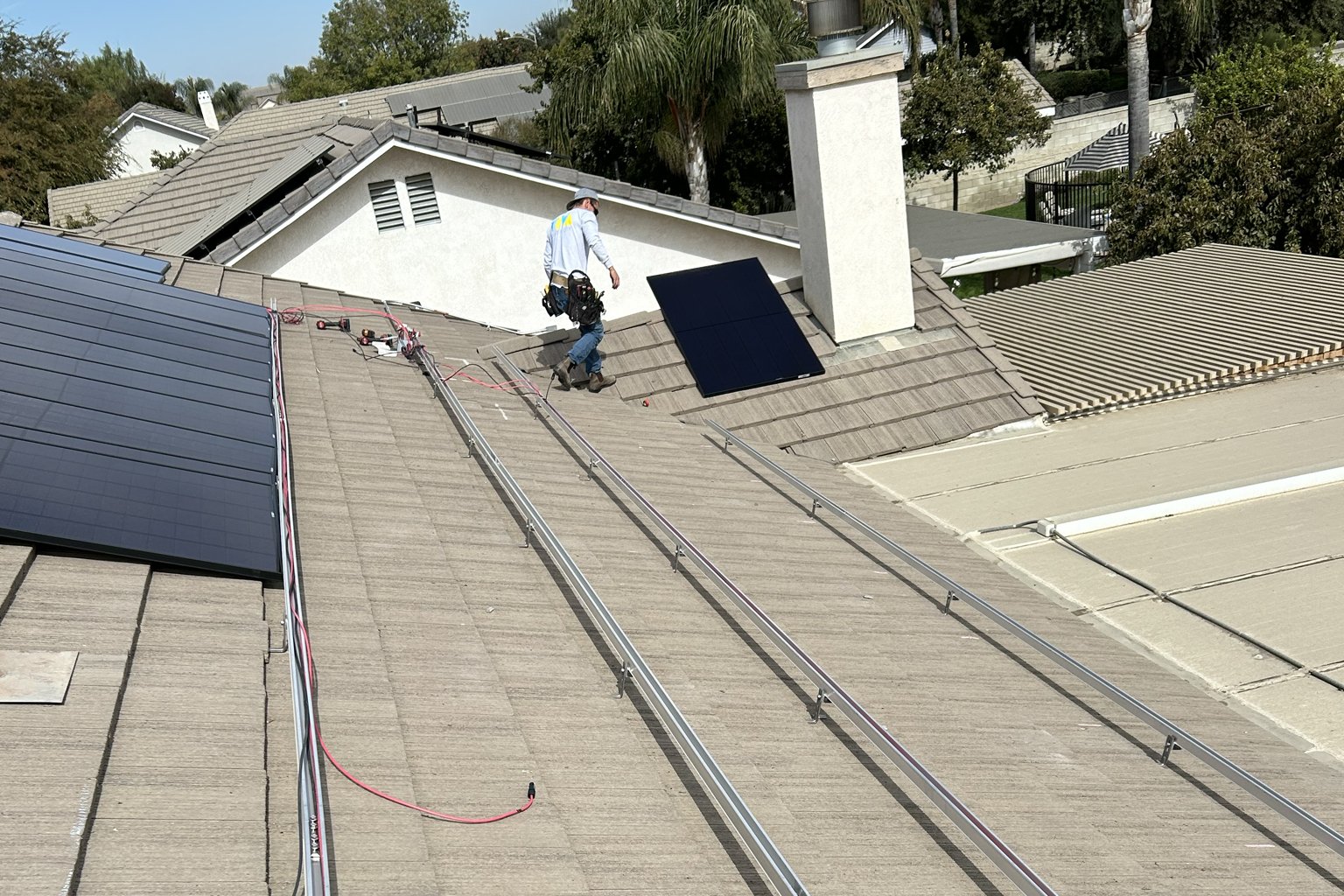
Installation crew working on a residential solar system with rail-based mounting on a concrete tile roof, demonstrating the typical flush-mount setup used in California homes.
Every few weeks, a new viral post claims you can install solar without drilling holes in your roof. The idea is appealing: no penetrations, no leaks, no stress. Unfortunately, that’s not how rooftop solar usually works in California.
This guide walks through what’s technically possible, what isn’t, and why professional installers rely on flashed, waterproof mounts for long-term roof protection.
Why Homeowners Want “Hole-Free” Solar
There are two big fears behind this question:
Leaks
Roof damage
Both concerns are valid. Roofs are expensive. But modern mounting hardware isn’t the same equipment used 15 years ago. Today’s flashed mounts are engineered to integrate with your roof’s waterproofing—not violate it.
So yes, holes are required on most roofs… but they’re not the risk people imagine.
When Solar Can Be Installed Without Roof Penetrations
There are only a few roof types where true “no-drill” mounting is achievable and safe.
1. Standing-Seam Metal Roofs
These roofs allow clamp-on attachments that grip the raised seams.
No holes, no flashing, no waterproofing complications.
They’re structurally ideal for solar.
2. Some Flat Roofs (Ballasted Systems)
On certain commercial-style roofs—not common on Central Valley or Central Coast homes—solar can be weighed down using ballasts rather than drilled mounts.
But these systems require specific engineering and roof load capacity.
Worth noting:
Most residential homes in Fresno, Sanger, Clovis, Morro Bay, Los Osos, and SLO County do not have these roof types.
When You Cannot Avoid Roof Holes
For most California homeowners, penetrations are necessary. This includes:
Composite shingle roofs
Clay or concrete tile roofs
Low-slope asphalt roofs
Older roofs nearing end of life
If your home falls into these categories, a drilled and flashed mount is the correct, code-compliant approach.
What About Rail-Less Solar?
You’ll see some companies advertising rail-less systems as a way to “reduce penetrations.”
Here’s the accurate version:
Rail-less still requires roof penetrations.
It’s less flexible for layout.
It’s more sensitive to roof irregularities.
It’s harder to service in the future.
This is why Viva Energy does not use rail-less systems for most installations. Flush-mount rail systems remain the most reliable for local roofs.
How Professional Mounting Protects Your Roof
Penetrations aren’t the enemy. Poor workmanship is.
A correctly installed solar mount includes:
Flashing:
A metal or composite plate slides under the shingle layer to create a continuous waterproof barrier.
Lag Bolt + Seal:
Stainless hardware is anchored into the roof structure.
High-grade sealing materials prevent moisture intrusion.
Load Distribution:
Rails spread weight across multiple attachment points to reduce stress on the roof.
Tile Roof Standoffs or Hooks:
Tiles are lifted, not drilled, and replaced around the flashing.
When done properly, these mounts are more watertight than many original roof penetrations (vents, plumbing stacks, satellite dishes).
Why “Hole-Free” Solar Often Isn’t the Best Choice
Even in cases where you could avoid penetrations, rail-based systems offer:
Better structural integrity
Better long-term service access
Cleaner panel alignment
Higher wind resistance
More flexible design options
And because we’re working on 25+ year lifespans, durability matters more than novelty mounting techniques.
What Homeowners Can Expect With Viva Energy
Here’s how we approach rooftop mounting:
We evaluate roof condition and remaining lifespan.
We use flashed, waterproofed mounts appropriate for your roof type.
We avoid rail-less systems due to local roof types and long-term reliability concerns.
For metal roofs, we do offer clamp-based, penetration-free installs.
We photograph every mounting point for your records.
We build systems engineered for Valley heat, coastal wind loads, and long-term weather exposure.
The result: A system that performs for decades without compromising your home’s protection.
Bottom Line
If you have a typical California roof, solar will require roof penetrations — and that’s exactly what you want.
Modern flashed mounts are strong, secure, code-compliant, and engineered to keep your roof watertight for decades.
“Hole-free solar” sounds appealing, but for most homes, it’s neither realistic nor the best option.
If you’d like to know how solar would mount on your roof type, we can walk you through the exact hardware and layout during a consultation.
References
IronRidge Roof Mounting Best Practices: https://www.ironridge.com
Quick Mount PV Attachment Guide: https://www.quickmountpv.com
Solar Contractor Roof Waterproofing Standards (SEIA): https://www.seia.org
California Building Code: Residential Roof Load & Wind Resistance Requirements: https://www.dgs.ca.gov/BSC