
Do You Need to Clean Your Solar Panels? What California Homeowners Should Know
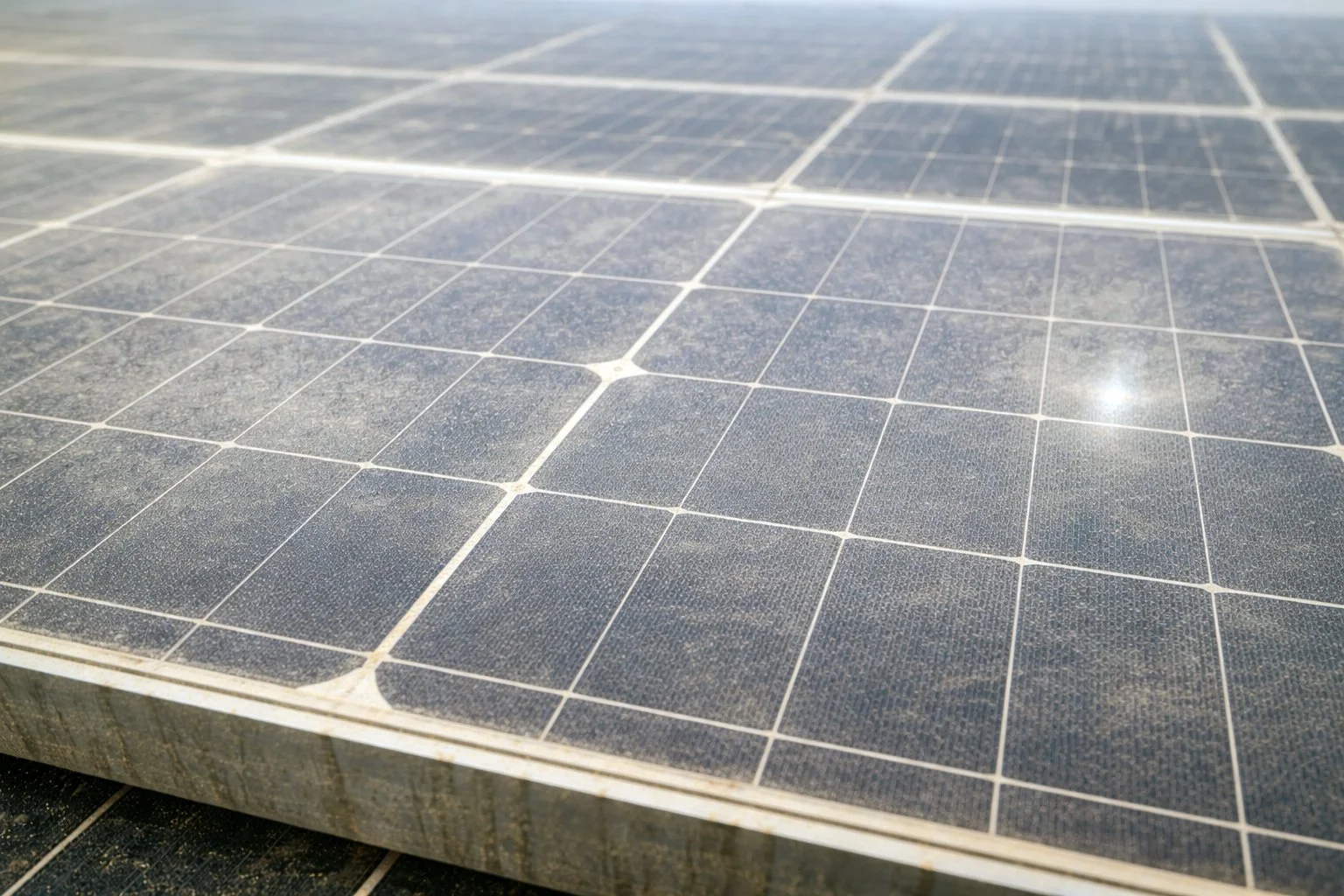
Light dust and pollen on solar panels is common and often does not significantly affect performance.
At some point after going solar, most homeowners notice it. A thin layer of dust. Pollen. Maybe a little grime along the bottom edge of the panels.
The natural question follows: do these need to be cleaned?
Most of the time, the answer is no.
Here’s how solar panel soiling actually affects performance, what’s normal in California, and when cleaning is worth considering.
What “Soiling” Means in Solar Terms
Soiling is the industry term for dirt, dust, pollen, or debris that settles on solar panels and partially blocks sunlight.
This sounds dramatic, but in practice, soiling is usually mild. A thin layer of dust does not stop a panel from working. It slightly reduces how much light reaches the cells, which can lead to a small drop in production.
Small is the key word.
How Much Energy Is Typically Lost
In most residential systems, light soiling results in very minor production loss. Often it is a few percent or less.
In California, regular rain during the fall and winter usually washes panels naturally. Even coastal fog and morning dew help reduce buildup over time.
For many homeowners, the energy lost to light dirt is less than the cost and risk of cleaning the panels.
Why California Is Different
Soiling varies a lot by location.
Central Valley homes may see more dust from agriculture and dry conditions. Coastal homes deal more with salt air, pollen, and fog. Neither automatically means panels need frequent cleaning.
What matters more than appearance is whether the buildup is heavy enough to cause sustained, noticeable production loss.
When Cleaning Might Make Sense
There are situations where cleaning is reasonable:
Long dry periods with no rain
Heavy dust from nearby construction or agriculture
Bird droppings that cover a concentrated area
A measurable drop in production that does not align with seasonal expectations
In these cases, cleaning can restore some lost output.
When Cleaning Is a Waste of Time
Cleaning is usually unnecessary when:
The panels just look dusty
Production is tracking normally for the season
Rain is expected within the next few weeks
The only motivation is how the panels look from the ground
Solar panels are not windows. They do not need to look spotless to work well.
Why DIY Cleaning Can Be Risky
Climbing on a roof to clean panels comes with real safety risks. There is also a risk of damaging the panels if improper tools or pressure are used.
Pressure washers, abrasive brushes, and harsh chemicals can scratch the glass or damage seals. That kind of damage is far more expensive than any energy lost to dust.
If cleaning is needed, it should be done carefully, or by professionals who know how to work on solar systems safely.
How to Decide Without Guessing
Instead of relying on appearance, look at performance trends.
Compare month to month or year over year production, not day to day fluctuations. If output is consistent with seasonal expectations, the panels are doing their job.
If production drops unexpectedly and stays low without a clear explanation like weather or shorter days, that is when it makes sense to investigate further.
The Bottom Line
Most solar panels in California do not need routine cleaning. Light dust and pollen are normal and usually have minimal impact on performance.
Cleaning can help in specific situations, but it is not a regular maintenance requirement for most homeowners. Understanding what actually affects production can save you money, time, and unnecessary worry.
References
EnergySage – How dirt, dust, and weather affect solar panel performance
https://www.energysage.com/solar/solar-panels-in-winter-weather-snow-affect-power-production/US Power – Seasonal solar production differences in California and real-world output examples
https://www.uspower.us/blog/solar-production-winter-vs-summer-california-2025U.S. Department of Energy – Solar PV performance and resilience considerations in varying conditions
https://www.energy.gov/femp/solar-photovoltaic-hardening-resilience-winter-weather